
The modern business landscape demands agility and responsiveness. Organizations struggling to keep pace with evolving customer needs and market shifts often find themselves hampered by traditional, rigid reporting processes. This is where an Agile Status Report Template becomes an invaluable tool. It provides a structured and easily digestible overview of an agile project's progress, highlighting successes, identifying roadblocks, and facilitating informed decision-making. A well-crafted template isn't just about presenting data; it's about fostering transparency, collaboration, and continuous improvement. This article will delve into the key components of an effective Agile Status Report Template, offering practical guidance on how to tailor it to your specific needs and ensure its maximum impact. Let's explore how to leverage this template to optimize your agile workflows and achieve greater success.
The core purpose of an Agile Status Report Template is to provide a clear and concise summary of the project's current state, enabling stakeholders to understand progress, identify potential issues, and adjust plans accordingly. It's a living document, not a static one, and should be regularly reviewed and updated to reflect the latest developments. A poorly designed template can become a source of confusion and delay, while a comprehensive one can significantly streamline communication and boost team morale. Ultimately, a successful Agile Status Report Template empowers teams to move faster, deliver value more consistently, and adapt to change with greater ease. It's a fundamental element of agile methodologies, promoting accountability and fostering a culture of continuous feedback.
1. Project Overview & Goals
The foundation of any successful Agile Status Report lies in a clear understanding of the project's initial goals and objectives. These goals should be SMART – Specific, Measurable, Achievable, Relevant, and Time-bound. Without a defined scope, it's impossible to accurately assess progress and identify areas for improvement. The initial project charter, outlining the problem being addressed and the desired outcomes, serves as the starting point for this section. It's crucial to revisit and refine this charter throughout the project lifecycle, ensuring it remains aligned with evolving business needs. Documenting these initial goals provides a benchmark against which to measure progress and demonstrate the value delivered. For example, a project focused on improving customer onboarding might have goals such as "Increase customer activation rate by 15% within Q3" or "Reduce customer support tickets related to initial setup by 10%." Clearly articulating these goals is paramount to establishing a shared understanding among all stakeholders.
2. Progress Against Sprint Goals
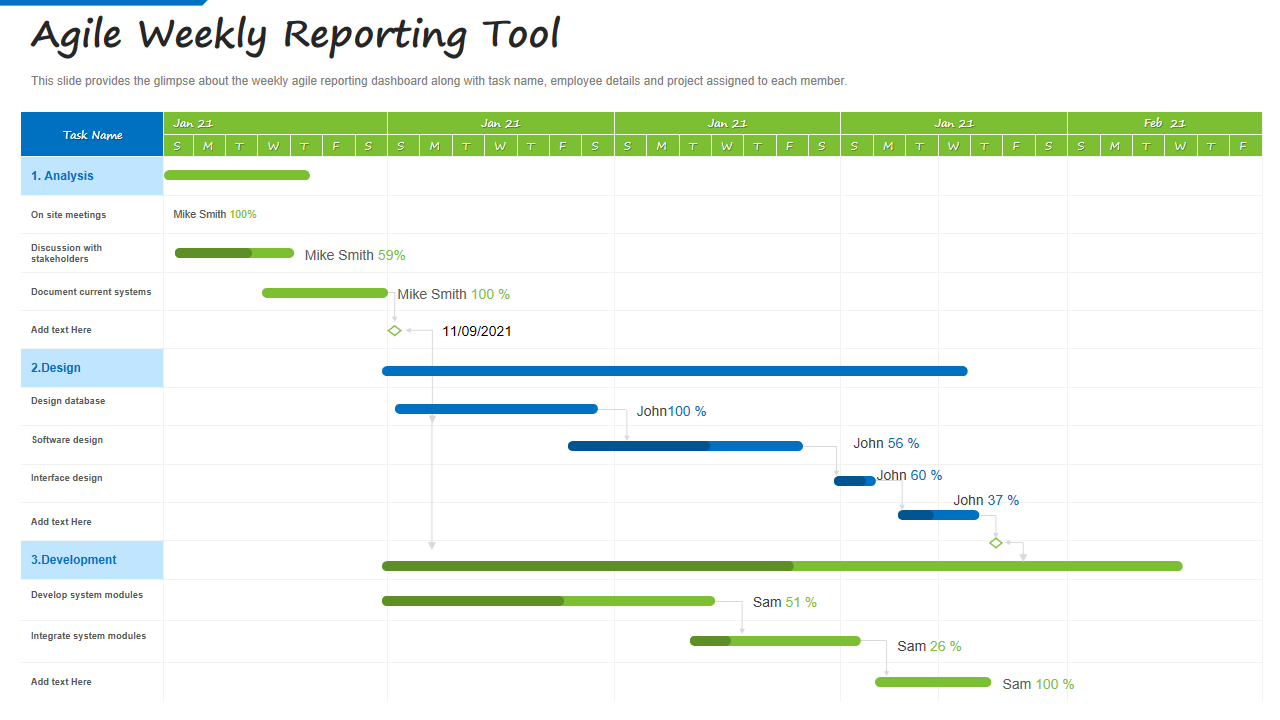
This section meticulously details the progress made against the sprint goals established during the sprint planning phase. It's not just about reporting what was done, but how much was accomplished and whether it met the agreed-upon targets. Each sprint goal should be clearly defined, with specific metrics used to measure success. For instance, a sprint goal might be "Implement user authentication flow" and the metrics would include the number of users successfully logged in, the error rate of login attempts, and the time taken to complete the flow. The template should include a visual representation, such as a Gantt chart or a progress bar, to illustrate the overall progress. It's important to acknowledge any deviations from the sprint goal and explain the reasons behind them. This demonstrates transparency and allows for proactive adjustments. Furthermore, tracking these metrics allows for a deeper understanding of the team's velocity and identifies potential bottlenecks.

3. Task Completion & Blockers
This section provides a detailed breakdown of completed tasks, highlighting any challenges encountered and the steps taken to resolve them. It's vital to accurately record the status of each task, including whether it's complete, in progress, or blocked. Blocked tasks are particularly important to document, as they represent potential impediments to progress. The template should include a section for identifying the root cause of the blockage, along with the actions taken to address it. Common blockers might include lack of resources, unclear requirements, technical difficulties, or dependencies on other teams. A log of these blockers, along with their resolution status, is crucial for tracking progress and preventing future delays. Regularly reviewing the task list and identifying potential roadblocks proactively is key to maintaining momentum. Consider using a Kanban board to visualize the workflow and track the status of each task.
4. Product Backlog & Prioritization
The Product Backlog serves as the source of requirements for the project, and the Status Report Template provides a clear view of its current state. This section outlines the items in the backlog, their priority, and the estimated effort required for each. The priority system (e.g., High, Medium, Low) should be clearly defined and consistently applied. The template should also include a visual representation of the backlog, such as a prioritized list, to quickly identify the most critical items. Regular backlog refinement sessions, where the team discusses and prioritizes items, are essential for maintaining a healthy backlog. The status report should reflect the current state of the backlog, highlighting any items that are ripe for prioritization or that require further investigation. A well-maintained backlog ensures that the team is always working on the most valuable features.
5. Team Velocity & Capacity
This section provides insights into the team's capacity and how it's performing. Velocity, a measure of the amount of work completed per sprint, is a key metric for understanding team productivity. The template should track the team's velocity over time, allowing for trend analysis and forecasting future performance. It's important to consider both the amount of work completed and the quality of the work. The team's capacity, which represents the available time and resources, should also be assessed. This includes factors such as team member availability, training needs, and external dependencies. Analyzing team velocity and capacity allows for proactive adjustments to resource allocation and project planning. Regularly reviewing these metrics helps identify potential bottlenecks and ensures that the team has the resources it needs to succeed.
6. Risks & Issues
This section is dedicated to identifying and tracking potential risks and issues that could impact the project. It's a proactive approach to risk management, allowing the team to anticipate and address potential problems before they escalate. The template should include a section for documenting each risk, its potential impact, and the mitigation strategies being implemented. Common risk categories include technical risks, schedule risks, and resource risks. Issues, which are problems that are currently impacting the project, should also be documented, along with their impact and proposed solutions. Regularly reviewing the risk and issue log ensures that potential problems are identified and addressed promptly. A proactive approach to risk management significantly increases the likelihood of project success.
7. Budget & Cost Tracking
This section provides a transparent overview of the project's budget and cost tracking. It's crucial to maintain accurate records of all expenses incurred during the project. The template should include a breakdown of costs by category, such as labor, materials, and software licenses. Regularly reviewing the budget and cost tracking data allows for early detection of potential overruns. The template should also include a comparison of actual costs to the planned budget, highlighting any variances. Effective cost tracking is essential for maintaining financial accountability and ensuring that the project stays within budget. Consider using project management software to automate the tracking process and generate reports.
8. Next Steps & Action Items
This section summarizes the key takeaways from the status report and outlines the next steps to be taken. It's a concise reminder of the project's current status and the priorities for the upcoming sprint. The template should include a list of action items, assigned to specific team members, with clear deadlines. This ensures that everyone is aware of their responsibilities and that progress is tracked effectively. Regularly reviewing and updating the action items ensures that the team remains focused on achieving its goals. A well-defined action item list provides a clear roadmap for the next sprint and helps to maintain momentum.
Conclusion
The Agile Status Report Template is more than just a document; it's a communication tool, a risk management system, and a performance indicator all rolled into one. By consistently utilizing this template and adapting it to your specific project needs, you can significantly improve your team's efficiency, transparency, and overall success. The key to maximizing its effectiveness lies in its adaptability – don't treat it as a rigid set of rules, but rather as a flexible framework that can be tailored to reflect the unique dynamics of your agile project. Continuous improvement, based on feedback and analysis of the template's effectiveness, is essential for ensuring its continued relevance and value. Ultimately, a well-crafted and diligently maintained Agile Status Report Template empowers teams to deliver value incrementally and adapt to the ever-changing demands of the business.
0 Response to "Agile Status Report Template"
Post a Comment