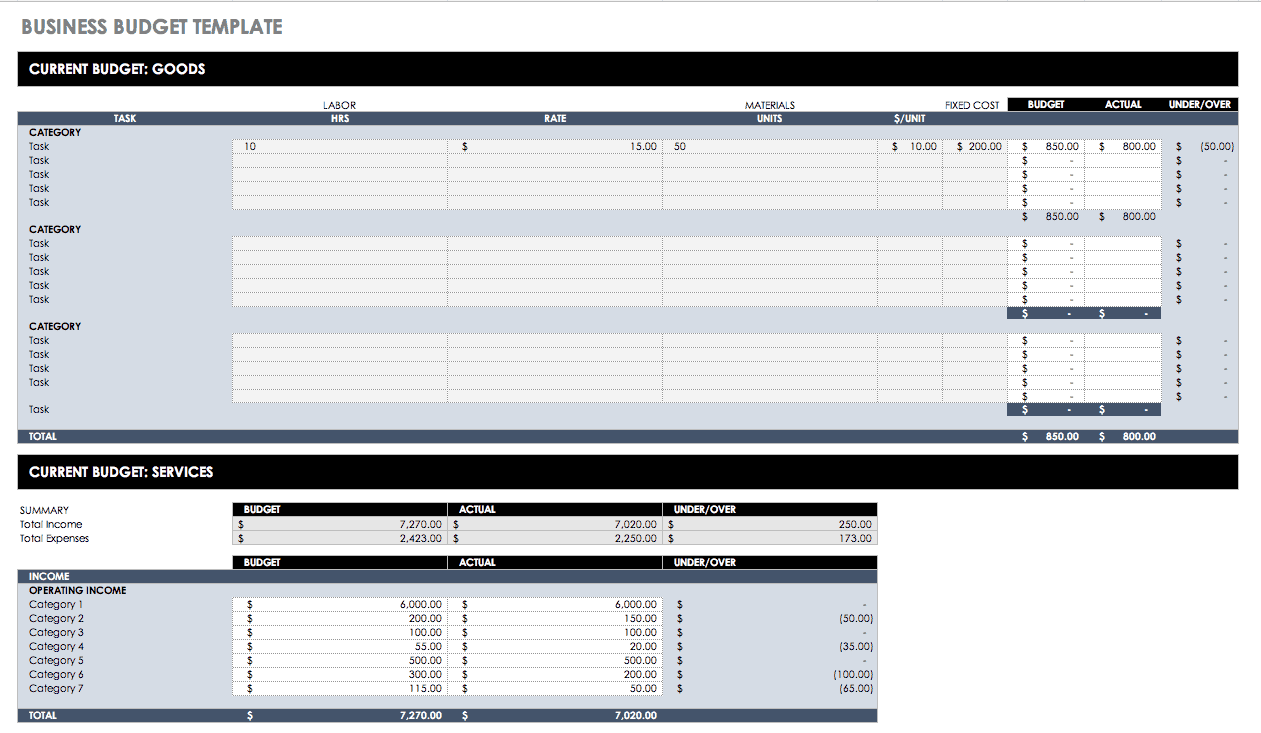
Planning for your small business is a crucial step towards success, but often, the initial steps – creating a realistic budget – can feel daunting. Many entrepreneurs struggle with understanding where their money is going and how to allocate resources effectively. That's why we've created a free, easy-to-use Excel template designed to help you build a solid financial foundation for your business. This template isn't just a static spreadsheet; it's a dynamic tool that allows you to track income, expenses, and ultimately, your profitability. Free Small Business Budget Template Excel is your key to gaining control of your finances and making informed decisions. It's a powerful starting point for any small business owner looking to improve their financial health. Let's dive in!
Understanding the Importance of a Budget
Before we get to the template itself, it's important to understand why budgeting is so vital for small businesses. A budget isn't just about tracking expenses; it's about setting financial goals and ensuring you have the resources to achieve them. Without a budget, you're essentially flying blind, making decisions based on guesswork rather than data. Poor budgeting can lead to cash flow problems, missed opportunities, and ultimately, business failure. A well-structured budget allows you to identify areas where you can cut costs, increase revenue, and invest in growth. It provides a clear roadmap for your financial future. Furthermore, a budget facilitates better forecasting, enabling you to anticipate potential challenges and proactively address them. It's a fundamental tool for long-term business sustainability.
Key Components of a Small Business Budget Template
Let's break down the essential elements of a comprehensive budget template. This template is designed to be adaptable to various business types, but the core principles remain the same. The template includes sections for income, expenses, and profit/loss. It's built to be easily customizable to reflect your specific business needs. The structure allows for detailed tracking and analysis, providing valuable insights into your financial performance. Remember, the goal is not just to calculate numbers; it's to understand why those numbers are what they are.
Income Section
The income section is the foundation of your budget. It outlines all the sources of revenue your business generates. Here's a breakdown of what to include:
- Sales Revenue: This is the primary source of income. Record all sales figures, broken down by product or service.
- Other Income: Include any other sources of income, such as interest earned, rental income, or grants.
- Recurring Revenue: If you have subscriptions, service fees, or other recurring income streams, clearly list them here.
Expense Section
The expense section details all the costs associated with running your business. Categorizing expenses is crucial for identifying areas where you can save money. Common expense categories include:
- Cost of Goods Sold (COGS): This covers the direct costs of producing or acquiring goods for sale.
- Rent/Mortgage: The cost of your business premises.
- Utilities: Electricity, gas, water, internet, and phone bills.
- Salaries & Wages: Payments to employees.
- Marketing & Advertising: Expenses related to promoting your business.
- Insurance: Business liability, property, and other insurance premiums.
- Office Supplies: Stationery, printing, and other office supplies.
- Software & Subscriptions: Monthly fees for software, CRM, accounting software, etc.
- Professional Fees: Accounting, legal, and consulting fees.
- Travel & Entertainment: Business-related travel and entertainment expenses.
Profit & Loss (P&L) Section
The profit & loss (P&L) section calculates your net profit or loss for a specific period (e.g., monthly, quarterly, annually). It combines your revenue and expenses to determine your bottom line. This is a critical section for assessing the overall financial health of your business.
Budget vs. Actual
It's important to distinguish between your budgeted income and expenses and your actual income and expenses. The budget is a projection, while the actuals are the reality. Regularly comparing your budgeted and actual figures allows you to identify variances – differences between what you expected and what you actually achieved. Analyzing these variances can reveal areas where you're overspending or underspending.
Tips for Creating an Effective Budget
Creating a budget isn't a one-time task; it's an ongoing process. Here are some tips to help you succeed:
- Start Simple: Begin with a basic budget and gradually add more detail as your business grows.
- Be Realistic: Don't underestimate your expenses or overestimate your revenue.
- Track Everything: Meticulously track all income and expenses. Use accounting software or a spreadsheet to keep records.
- Review Regularly: Review your budget at least monthly to identify any potential problems and make adjustments as needed.
- Use Formulas: Utilize Excel's built-in functions to automate calculations and create more complex budgets.
- Consider Different Budgeting Methods: Explore different budgeting methods, such as zero-based budgeting, which requires you to justify every expense.
The Role of Cash Flow Management
Beyond simply tracking income and expenses, effective budgeting also focuses on managing your cash flow – the movement of money into and out of your business. A cash flow forecast predicts when you'll have cash available to pay your bills and invest in growth. Poor cash flow management can quickly lead to financial distress. Strategies for improving cash flow include negotiating payment terms with suppliers, offering discounts for early payment, and managing inventory effectively.
Benefits of a Well-Managed Budget
Investing in a well-structured budget offers numerous benefits for your small business. Here are just a few:
- Improved Financial Control: You gain a clear understanding of your financial position.
- Better Decision-Making: Data-driven decisions based on accurate financial forecasts.
- Increased Profitability: Identifying areas to reduce costs and increase revenue.
- Reduced Risk: Proactively addressing potential financial challenges.
- Streamlined Operations: Optimizing resource allocation and improving efficiency.
- Increased Confidence: Knowing you have a plan for your finances provides peace of mind.
Conclusion
Creating and maintaining a budget is a cornerstone of small business success. The Free Small Business Budget Template Excel provides a solid foundation for tracking income, expenses, and profitability. By consistently reviewing and adjusting your budget, you can gain control of your finances, make informed decisions, and ultimately, achieve your business goals. Remember that a budget is not a static document; it's a living tool that should evolve with your business. Don't be afraid to experiment with different budgeting methods and techniques to find what works best for you. With a little effort and discipline, you can transform your business finances into a powerful asset. Investing in a budget is an investment in the future of your business.
0 Response to "Free Small Business Budget Template Excel"
Post a Comment